




I approached Qmee as a small, practical way to earn rewards during spare moments rather than as a serious income source. It is a free lifestyle app from Qmee built around completing surveys, with PayPal cash-out presented as its main reward route. After using it, my view is fairly straightforward: it can be useful when I treat it like paid screen time, but it demands patience, careful attention to survey questions, and realistic expectations.
The app has been available since June 16, 2016, and its presence on Android is substantial, with over one million installs. Its average score sits at 4.2 from around 112 thousand ratings, which suggests that many people find the basic idea worthwhile while still leaving room for mixed experiences. It is rated for Everyone, and the current Android version is 3.8.27, requiring Android 7.0 or later.
What using Qmee feels like in everyday life
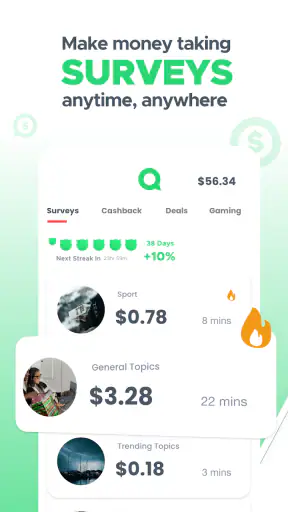
The central experience is simple: open the app, look through available survey opportunities, choose one, and answer questions in exchange for rewards. That simplicity is the strongest part of the product. I do not need to learn a complicated points system or spend time building a profile inside a game-like interface. The purpose is visible quickly, and the app is easy to understand even if I only open it occasionally.
In practice, the important distinction is between seeing a survey and successfully completing one. A survey may look suitable at first, but eligibility is usually determined by the questions asked at the beginning. I therefore learned not to treat every listing as guaranteed earning time. The opening questions act as a screening stage, and being rejected after spending a little time can feel frustrating.
That makes Qmee best suited to short, flexible sessions. I can imagine using it while waiting for a train, sitting in a reception area, or taking a quiet break after finishing daily tasks. It is less appealing when I set aside a fixed block of time and expect a predictable return. The app works around my schedule; it does not reliably turn a schedule into a fixed wage.
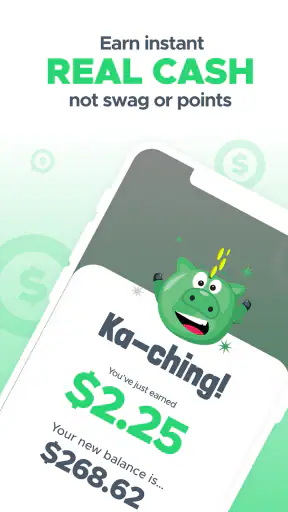
The PayPal cash-out option also shapes how I judge the app. The attraction is that the reward can be directed toward a familiar payment service rather than being locked into merchandise or a complicated catalog. For someone who already uses PayPal, that is a meaningful convenience. Still, I would check the available balance, withdrawal instructions, and account details carefully before assuming that every completed survey immediately becomes spendable money.
Why the app earns a place among survey tools
Compared with traditional market-research panels, Qmee feels more spontaneous. I can open it when I have a few minutes instead of committing to a long-term research routine. Compared with cashback apps, its main activity is answering questions rather than shopping or scanning receipts. Compared with reward games, it asks for opinions instead of requiring repeated play.
That difference matters because the best alternative depends on the kind of spare time I have. If I regularly shop online, a cashback service may fit my habits better. If I prefer predictable tasks, a panel with scheduled studies may be less distracting. If I want entertainment first and rewards second, a game-based app may feel more enjoyable. Qmee is strongest for someone who wants a direct survey workflow and accepts that availability can change.
One useful way to approach it is to compare the app with the value of doing nothing, not with a full job. A short survey can make an idle wait feel productive, but the reward should not be judged as though it replaces paid employment. This mindset prevents the most common disappointment: expecting a steady income from an app designed for occasional opportunities.
Account choices and the trust question
Because the app deals with surveys and cash rewards, I pay attention to the moments when it asks me to identify myself, provide information, or connect a payment destination. Those are not minor details. The convenience of cashing out depends on having an account that can be used correctly, while survey eligibility depends on answers that describe me accurately.
I recommend reading each prompt before accepting it rather than tapping through automatically. A survey may ask about household habits, shopping behavior, work, media use, or personal preferences. Accurate answers are important for the quality of the research and for avoiding a frustrating mismatch later. I also avoid creating an account with details I cannot maintain consistently, because changing information casually can make future survey matching less reliable.
The app is free to download, which removes an upfront financial barrier. That does not mean my time has no cost. The real investment is attention: reading questions carefully, completing screening steps, and deciding whether a particular opportunity is worth the interruption. I find the experience much better when I treat that attention as a limited resource.
For payment-related actions, I would use an account that I control personally and check the destination before confirming anything. This is basic advice, but it is especially relevant when an app promotes cash rewards. A reward app should never encourage me to share payment credentials casually or hand over control of an account just to speed up a withdrawal.
Where the data-sensitive moments appear
The most sensitive part of using Qmee is not the survey interface itself; it is the combination of profile information, answers, and reward-account details. Survey answers can reveal patterns about my interests and habits even when no single answer seems especially private. I therefore consider each questionnaire on its own terms before proceeding.
My practical rule is simple: if a survey asks for information I do not feel comfortable sharing, I leave it. The possibility of a reward does not make every question appropriate for me. I also avoid guessing just to pass a screening stage. Guessing may create inaccurate responses and makes the process less trustworthy for everyone involved.
I would also review the app’s current privacy and account controls directly before using it heavily. Policies and settings can change between app versions, and the most responsible decision depends on the choices visible at the time of installation. The Android release requirement is modest, so many older devices can run it, but an older phone may still offer a less comfortable experience if the operating system or device security is no longer well maintained.
Another overlooked point is notification discipline. Survey availability can encourage frequent checking, but constant alerts can make a low-value activity feel more important than it is. I prefer to control notifications and open the app at times I choose. This keeps the relationship with the app deliberate instead of letting every opportunity interrupt my day.
Small habits that improve the experience
My first useful habit is to start with surveys that appear manageable rather than automatically choosing the longest-looking opportunity. A longer questionnaire is not necessarily a better use of time if I am tired, distracted, or likely to abandon it. Short sessions reduce the annoyance of being interrupted halfway through.
Second, I keep my answers consistent and read the wording closely. Survey questions can distinguish between owning something, using something, buying something, and planning to buy it. Those differences are easy to miss when I rush. Slowing down slightly improves the quality of my responses and reduces the chance of creating contradictions during screening.
Third, I check my reward progress after finishing instead of assuming that every tap has been recorded exactly as expected. If something looks wrong, I make a note of the survey and the time while the details are fresh. That kind of simple record is useful when trying to understand whether an issue is a technical delay, an eligibility decision, or an incomplete submission.
A fourth tactic is to use Qmee in a defined window. For example, I might open it during a lunch break, complete one suitable opportunity, and close it. This prevents endless browsing through surveys that do not fit my available time. It also makes it easier to judge whether the app is genuinely useful to me rather than merely attractive because it always offers another possible task.
Finally, I would cash out only after checking that the connected PayPal details are correct and that I understand the steps shown in the app. The convenience of a familiar payment service is valuable, but it should not replace careful review. Reward apps are easiest to trust when I remain in control of the account and can see what action I am confirming.
Who will enjoy it, and who should skip it
Qmee is a good match for people who already have small pockets of unused time and enjoy giving opinions. Students, commuters, part-time workers, and anyone who spends time waiting may appreciate the low-commitment format. It is also suitable for users who prefer a direct cash-oriented reward path over collecting points for products they do not want.
It is less suitable for anyone looking for dependable monthly income. Survey supply, eligibility, and completion time can vary, so I would not use it to plan around bills or essential spending. It is also a poor fit for people who dislike personal questionnaires, become irritated by screening questions, or find it difficult to stop after an unsuccessful attempt.
Users who are particularly cautious about sharing behavioral or demographic information should take more time before joining. The right decision is personal: some people are comfortable answering ordinary market-research questions, while others would rather use a cashback service that connects more directly to shopping activity. Neither preference is wrong, but Qmee’s value depends on being comfortable with its survey-centered model.
I would also skip it if my phone does not meet the Android 7.0 minimum or if I cannot maintain a reliable payment account for cash-out. Installing an app is only the first step; the complete experience includes answering honestly, monitoring account choices, and handling rewards responsibly.
My cautious verdict after weighing the trade-offs
I see Qmee as a convenient side activity, not a shortcut to meaningful earnings. Its free entry, straightforward survey format, and PayPal cash-out make it easier to try than many reward services. The large Android audience and solid 4.2 average also indicate that the concept has broad appeal, although popularity alone does not remove the need to judge each survey and account decision carefully.
The strongest reason to use it is control over when I participate. I can open it during an otherwise empty moment, choose whether a survey is worth my attention, and stop whenever I want. The main weakness is the uncertainty around eligibility and time value. A survey can look promising and still end before I reach the reward stage, which is why I never treat the displayed opportunity as guaranteed income.
My recommendation is to try it with a clear boundary: use a short session, answer accurately, review the information requested, and confirm that the payment details belong to you. If the experience repeatedly feels like more screening than earning, another category of reward app may suit you better. If you enjoy surveys and want an occasional PayPal-oriented reward option, Qmee is reasonable to keep on your phone.
In the end, I trust the app most when I use it cautiously rather than blindly. I decide which questions to answer, keep notifications under control, protect my account details, and judge the reward against the time involved. That user-controlled approach is the difference between a useful spare-time tool and an app that quietly takes more attention than it gives back.


